Is SEO Still Relevant in 2026? A Practical Answer From Real-World Experience
Short answer: Yes, SEO is still relevant in 2026, but not in the way most people think.
But if you’re expecting it to work the way it did a few years ago, that’s where most of the confusion starts.
This question usually doesn’t come from curiosity. It comes from frustration.
In practice, I see this question being asked by:
- People launching new websites and seeing zero impressions
- Founders watching AI answers take up search results
- Marketers applying old SEO playbooks that no longer move the needle
- Businesses wondering if SEO is still worth the time and patience
If you’re asking this, your doubt is reasonable. Search has changed. Interfaces have changed. Expectations, however, often haven’t.
The Direct Answer (No Sugarcoating)
SEO is still relevant in 2026, but only if you understand what it’s meant to do now.
SEO today is not:
- A fast growth channel
- A guaranteed traffic source
- A volume game
SEO in 2026 is:
- A trust-building system
- A visibility compounding channel
- A long-term demand capture strategy
When people say “SEO doesn’t work anymore,” what they usually mean is:
“The shortcuts I used earlier stopped working.”
That’s an important distinction.
Why This Question Is Louder Than Ever in 2026
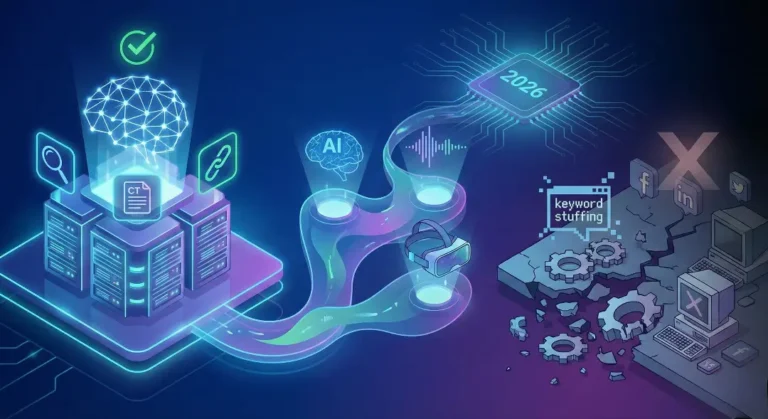
The rise of AI answers, SGE-style results, and zero-click searches didn’t kill SEO, but they exposed weak SEO very quickly.
Here’s what I’ve consistently observed in real projects:
- Informational pages without depth lose clicks faster
- Generic explanations get absorbed into AI summaries
- Sites without a clear topical identity struggle to gain traction
- New websites take longer to earn trust signals
So naturally, people start questioning whether SEO is still relevant.
The real issue isn’t relevance.
It’s misaligned expectations.
How SEO Actually Works in 2026 (Based on What I See)
Let’s strip away theory and talk about behavior.
What usually happens with a new or growing site
In most real cases:
- Pages get discovered fairly quickly
- Some pages index, others don’t
- Search Console shows “no data” or minimal impressions
- Random spikes appear, then disappear
- Gradual, uneven growth begins often after weeks or months
This phase hasn’t gone away.
What changed is how tolerant people are of it.
SEO in 2026 rewards consistency over intensity.
SEO Trends 2026: What Actually Matters vs What’s Noise
A lot is being said about SEO trends in 2026. Most of it is either exaggerated or half-true.
Trends that actually matter
- Topical clarity over keyword coverage
- Site-level trust signals, not page-level tricks
- Experience-backed content, not rewritten summaries
- Technical SEO stability, not over-optimization
Trends that are overstated
- “AI will replace SEO”
- “Links don’t matter at all”
- “Only brands can rank now”
In practice, I still see smaller, focused sites ranking but only when they play the long game properly.
SEO in 2026 vs SEO in the Past
Earlier SEO rewarded:
- Volume
- Frequency
- Aggressive optimization
- Link velocity
SEO in 2026 rewards:
- Focus
- Consistency
- Clear intent
- Technical reliability
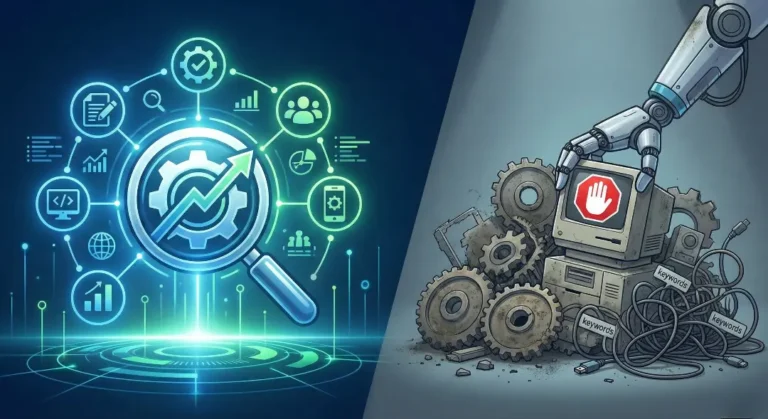
This shift is why many people feel SEO stopped working.
It didn’t. The criteria changed.
Technical SEO 2026: Still Relevant, Just Less Flashy
One of the most misunderstood areas right now is technical SEO in 2026.
Here’s the reality:
Technical SEO no longer gives you a ranking boost.
It gives you permission to compete.
In practice:
- Clean crawling and indexing matter more than ever
- Poor site structure silently limits growth
- Small technical issues compound over time
- Fixing everything doesn’t help but fixing the right things does
Most sites don’t fail because of one major technical issue.
They fail because of accumulated friction.
SEO Ranking Factors 2026 (As They Actually Play Out)
Search engines don’t rank pages, they evaluate patterns.
From what I consistently see, SEO ranking factors in 2026 lean heavily toward:
- Content relevance within a topic cluster
- Consistency of publishing intent
- User engagement signals over time
- Internal linking clarity
- Technical stability
What matters less than before:
- Exact-match keywords
- Aggressive on-page optimization
- Publishing frequency alone
SEO ranking factors now behave like trust signals, not checklists.
A Simple Mental Model That Helps
This framework explains most outcomes I see:
SEO = Trust × Time × Consistency
Not:
- Tools × tactics
- Content × speed
- Hacks × updates
Ask yourself:
- Is this site clearly about something?
- Would this content exist without SEO?
- Am I reinforcing the same intent repeatedly?
If yes, SEO still works.
If not, it stalls no matter how good the tools are.
Real-World Scenarios (That Happen More Than You Think)
Scenario 1: “SEO is dead” panic
- New site
- 20 articles published
- Zero impressions after 30 days
What usually fixes it:
- Waiting
- Tightening topical scope
- Improving clarity, not output
Scenario 2: AI impact misunderstood
- Informational pages lose clicks
- Decision-based pages remain stable
SEO didn’t fail here.
The content type became less valuable.
Scenario 3: Quiet success
- No viral spikes
- Slow impression growth
- One page starts ranking after 90 days
This is the most common and healthiest SEO pattern in 2026.
SEO Strategy 2026: What Actually Makes Sense
A realistic SEO strategy in 2026 looks like this:
- Fewer topics, deeper coverage
- Clear audience and problem focus
- Content written from experience
- Strong internal linking
- Patience with early data
What doesn’t work anymore:
- Publishing for coverage
- Chasing every keyword
- Expecting tools to show early validation
SEO strategy now is about positioning, not volume.
What Most Articles Still Don’t Explain
Here’s the uncomfortable truth:
SEO doesn’t reward effort. It rewards alignment.
You can:
- Work hard
- Publish consistently
- Follow every checklist
And still see nothing if:
- The site lacks focus
- The intent is unclear
- Trust signals are weak
At the same time, I’ve seen:
- Small sites outperform larger ones
- Low-volume pages drive steady leads
- Slow starts turn into reliable traffic
SEO in 2026 is quieter and not weaker.
Common Mistakes People Make in 2026
- Expecting fast validation from tools
- Treating impressions as rankings
- Publishing broad instead of focused content
- Over-optimizing pages early
- Abandoning SEO too soon
None of these mean SEO is irrelevant.
They mean expectations are misaligned.
SEO Predictions 2026 (Grounded, Not Clickbait)
Based on patterns, not hype:
- SEO will continue to reward depth over scale
- AI will amplify strong sites, not replace them
- New websites will take longer but be more stable once established
- Generic content will keep losing visibility
- Experience-driven content will compound
These aren’t predictions pulled from trends.
They’re extensions of what’s already happening.
Practical SEO Tips 2026 (That Actually Hold)
If you’re starting or recalibrating:
- Narrow your topic before expanding
- Write fewer, better pages
- Focus on internal linking early
- Expect delays, not instant feedback
- Measure trends, not days
These aren’t hacks.
They’re survival principles for modern SEO.
FAQs
Is SEO still relevant for new websites in 2026?
Yes, but patience and focus matter more than speed.
Does AI reduce SEO traffic?
It reduces low-value clicks, not search demand.
Is keyword research still important?
Yes, but intent matters more than volume.
Should businesses stop SEO and focus on social?
They serve different purposes. One doesn’t replace the other.
Why does Search Console show no data early on?
Because evaluation takes time, not because SEO failed.
Does publishing more content help?
Only if it reinforces topical clarity.
Final Take: Is SEO Still Relevant in 2026?
Yes, but SEO is no longer a shortcut.
SEO in 2026:
- Rewards patience
- Punishes shortcuts
- Compounds slowly
- Favors clarity and trust
If you want fast wins, SEO will frustrate you.
If you want sustainable visibility, SEO is still one of the most reliable channels available.
The question isn’t whether SEO is relevant.
The real question is:
Are you willing to do it the way search systems expect today?